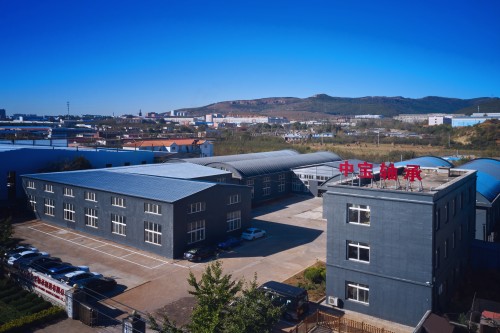
Welcome to Wafangdian Zhongbao Bearing Manufacturing Co.,Ltd!




Bearing selection in mining equipment isn't a catalog exercise. It's a reliability decision that determines whether your crusher runs through the shift or fails at 3 AM.
Mining equipment operates under conditions that challenge bearing reliability: heavy radial loads from ore processing, shock loads from uncrushable material entering the chamber, continuous vibration from screening and conveying, dust contamination, shaft misalignment caused by thermal expansion and structural deflection, and operating hours that can stretch into 24/7 production schedules.
A spherical roller bearing that works reliably in a clean factory environment may experience premature failure in a mining application if its load capacity, internal clearance, lubrication or protection is not matched to the actual operating conditions.
This guide explains the engineering factors that matter when selecting a spherical roller bearing for mining equipment, from load and speed to clearance, vibration, lubrication and contamination. It also shows how these factors influence bearing selection for crushers, vibrating screens, conveyors and other heavy-duty equipment.
The operating environment in mining creates a cascade of interconnected challenges:
Load → Vibration → Misalignment → Contamination → Temperature → Lubrication
Each factor can amplify the others. Heavy radial loads can cause shaft deflection, which contributes to misalignment. Vibration from crushers and screens can accelerate fatigue and wear. Dust contamination can degrade lubricant quality, increasing friction and heat generation. Thermal expansion can then reduce the bearing's effective operating clearance.
The spherical roller bearing's self-aligning capability provides a critical margin, but this capability has limits. Misalignment can reduce load distribution across the rollers and accelerate fatigue, heat generation and wear. The allowable misalignment depends on the bearing design, load, speed and mounting arrangement, so it should be checked against the manufacturer's application data rather than treated as a fixed angle.
Calculate the equivalent dynamic load (P) using the actual operating conditions, including radial load, belt tension, transmitted forces and load variations—not simply the catalog maximum capacity.
For mining conveyors and other heavy-duty equipment, peak loads, shock loading and load variations should be considered when determining the required dynamic load rating. The appropriate design margin should be established from the application and equipment requirements rather than applying a fixed percentage.
The static load rating is also important when the bearing may experience heavy shock or peak loads. Dynamic load rating is primarily used to evaluate fatigue life under repeated operating loads, while static load rating helps assess the risk of permanent deformation under high stationary or shock loads.
Spherical roller bearings are commonly used in low- to medium-speed heavy-duty applications. Check both the reference speed and limiting speed for the selected bearing, taking lubrication, load and operating temperature into account.
Higher operating speeds can increase friction and heat generation. Therefore, the actual operating condition must remain within the bearing's application limits, with appropriate attention to lubrication and heat dissipation.
Internal clearance is one of the key selection factors in mining applications. Thermal expansion, interference fits and operating conditions can all reduce the effective operating clearance during service.
If the remaining clearance becomes too small, friction and heat generation can increase, potentially accelerating wear or causing bearing damage. This is why clearance should be treated as an engineering design decision rather than simply using the catalog default.
Check shaft and housing geometry before mounting, including shaft runout, shoulder geometry and housing alignment. The allowable tolerance should be determined according to the bearing size, mounting arrangement and equipment requirements.
Although spherical roller bearings can accommodate a certain degree of angular misalignment, excessive or continuously changing misalignment can alter roller load distribution and reduce bearing performance.
Mining equipment generates continuous vibration and intermittent shock loads. Heavy shock loads should first be considered in the dynamic and static load calculations, as well as in cage and material selection.
A larger internal clearance may also be required if shaft deflection, interference fit or temperature rise significantly reduces the effective operating clearance. For vibrating screens and similar equipment, consider spherical roller bearings specifically designed for high-vibration or oscillating-load applications.
Lubrication should be selected according to bearing speed, load, temperature, sealing arrangement and maintenance conditions.
Grease is widely used for mining equipment because of its simple application and compatibility with many sealing arrangements. In applications where circulating oil is used, oil filtration, cleanliness and heat removal become important factors in maintaining bearing performance.
Using unsuitable grease, incorrect grease quantity or inadequate relubrication can accelerate wear and temperature rise. The lubrication method should therefore be considered together with the actual operating and maintenance conditions.
In mining environments, dust and abrasive particles can contaminate lubricant and accelerate raceway and rolling-element wear.
Sealing, housing protection and relubrication practices should therefore be evaluated together rather than treating the bearing seal as the only contamination barrier. For equipment operating in highly contaminated environments, the complete bearing-housing-lubrication system should be considered during selection.
When Is a CC Design Suitable?
CC-type spherical roller bearings with pressed-steel cages are widely used where high radial load capacity, efficient lubricant flow and cost-effective operation are important.
Their internal design can provide a high roller complement while maintaining suitable space for lubrication and cage operation, making CC-type bearings widely applicable to heavy industrial machinery.
When Is a CA Design Preferred?
Machined-brass cage designs may be considered where the application involves severe vibration, shock loading, higher operating temperatures or other demanding operating conditions.
The final choice between CC and CA should not be based on cage material alone. Load, speed, temperature, lubrication, mounting conditions and the manufacturer's specific bearing design should all be evaluated before making the selection.
For applications where you need to compare available spherical roller bearing configurations and sizes, see ZBO's Spherical Roller Bearings product range.
Section 3.3 explained why clearance matters. This section addresses the actual decision: how to determine whether C3 or C4 clearance is required.
The goal is to maintain adequate effective operating clearance under real operating conditions. This is not a simple temperature-to-clearance table.
Four factors should be considered:
Temperature difference: The temperature difference between the inner and outer rings causes thermal expansion. A hot shaft relative to the housing can consume part of the internal clearance.
Interference fit: Tight shaft and housing fits can reduce the bearing's initial internal clearance after mounting.
Shaft and housing conditions: Actual fit dimensions, roundness and alignment affect how the clearance is distributed during operation.
Operating speed: Higher speeds can generate additional heat and change the thermal balance between the bearing rings.
The correct clearance class should therefore be determined from the actual shaft fit, housing fit, temperature difference, bearing size and operating conditions. C3 or C4 may be appropriate when these factors significantly reduce the effective operating clearance.
For example, ZBO's 22200 series includes configurations such as W33C3, providing an example of how internal clearance and lubrication features can be specified for particular operating conditions. The final selection should still be based on the actual application requirements.
Even when the basic bearing dimensions are correct, selection decisions can still create reliability problems. The following mistakes are particularly common in mining applications.
Matching the bore, outside diameter and width is only the starting point. The selected bearing must also suit the actual load, speed, clearance, cage design and operating environment.
C3 or C4 should not be selected simply because the equipment operates at a certain temperature or carries a heavy load. Shaft and housing fits, temperature differences, bearing size and operating speed should be evaluated together to determine the required operating clearance.
Mining equipment can experience both continuous vibration and intermittent shock loading. These conditions should be considered when evaluating load capacity, cage design, bearing clearance and the overall bearing arrangement.
A lower purchase price does not necessarily mean lower bearing cost. Premature bearing failure can lead to unplanned downtime, maintenance labor, equipment damage and production losses. For critical mining equipment, bearing selection should therefore consider total operating cost and expected service reliability.

Different mining machines place different demands on spherical roller bearings. Instead of selecting a bearing only from the equipment name, evaluate the actual operating conditions of each bearing position.
| Application | Main Selection Priority |
| Crusher | Heavy radial load + shock + contamination |
| Vibrating Screen | High vibration + rotating deflection + temperature |
| Conveyor | Continuous operation + contamination + lubrication |
| Bucket Elevator | Load + speed + mounting + dust |
| Gearbox | Load + speed + lubrication + operating clearance |
The final bearing series, clearance and cage design should be determined from the actual shaft size, load, speed, mounting arrangement and operating environment. For critical equipment, the bearing should be selected from the conditions at the specific bearing position rather than from the machine type alone.
For demanding material-handling applications, ZBO also supplies large and extra-large spherical roller bearings for high-load applications.
Different mining equipment imposes different operating conditions. The table below summarizes the main selection priorities for each application.
Don't wait for complete failure.
Monitor the bearing for changes in operating condition, including:
Unusual noise during operation
Increased vibration levels
Operating temperature rising without a corresponding load change
Metal particles or abnormal contamination in lubricant
Visible wear, corrosion or deformation on rollers and raceways
Raceway spalling or pitting
Seal damage that allows contamination
Measured clearance exceeding acceptable limits
Regular condition monitoring and inspection can identify developing bearing problems before they result in an unplanned shutdown. For heavy-duty applications such as crushers and vibrating screens, bearing condition should be checked as part of scheduled maintenance.
ZBO manufactures spherical roller bearings with CC structure as a primary product line, using high-quality carbon steel plate stampings for cages with improved mechanical strength.
The CC design increases the number of rolling elements and optimizes rolling-element geometry to support high radial load capacity for demanding industrial applications.
For specific mining and material-handling applications, ZBO provides:
Customized internal structure design
Special material and heat treatment processes
Technical selection support based on actual operating conditions
Batch supply capability for OEM and MRO requirements
ZBO also manufactures extra-large spherical roller bearings for material-handling applications, with controlled ring and rolling-element geometry and roundness measurements down to 0.003 mm for specified components.
For buyers evaluating larger bearing sizes and load ratings, the ZBO 22300 Series spherical roller bearings provide a practical reference for large-size bearing specifications and operating parameters.
Need help selecting a spherical roller bearing for mining equipment?
For design engineers, send us your required shaft size, load, speed and operating conditions. If you already have a bearing model, include it for reference. Our technical team can provide a selection recommendation based on your specific application.
For replacement buyers, send us the current bearing number or a photo of the bearing marking, along with the equipment application and dimensions. We can help identify a suitable replacement for your existing installation.
Contact: info@zbobearing.com
Website: www.zbobearing.com


